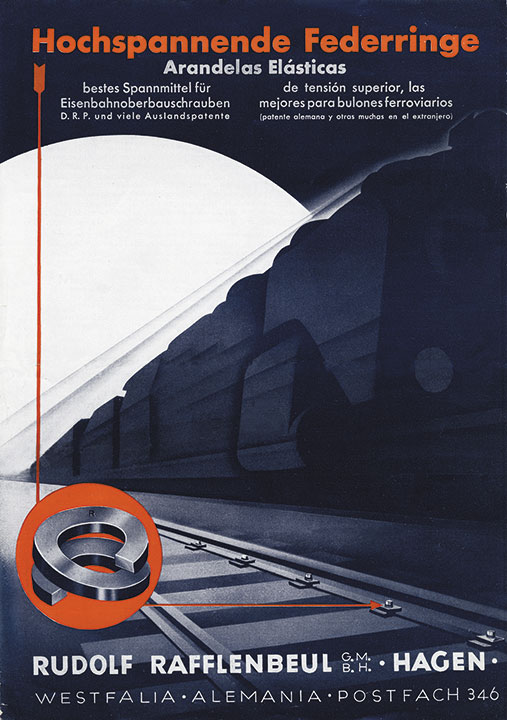
Among the numerous ‘founders’ of that era is Rudolf Rafflenbeul, who – with the active support of his wife Minna Rafflenbeul, née Lepperho – lays the foundation for today’s company at the age of 32. He first joins forces with Wilhelm Hedtmann, and in 1902 the company is entered in the commercial register as ‘Hedtmann und Rafflenbeul, Hagen in Westfalen-Eilpe’. The company was specialized in producing spring washers in at Felsenstraße (near today’s circular gymnasium). These are screw locks that were originally invented and patented in England in 1878 as so-called Grower rings.
HISTORY & MANAGEMENT
From generation
to generation.
Over 100 years of Rafflenbeul

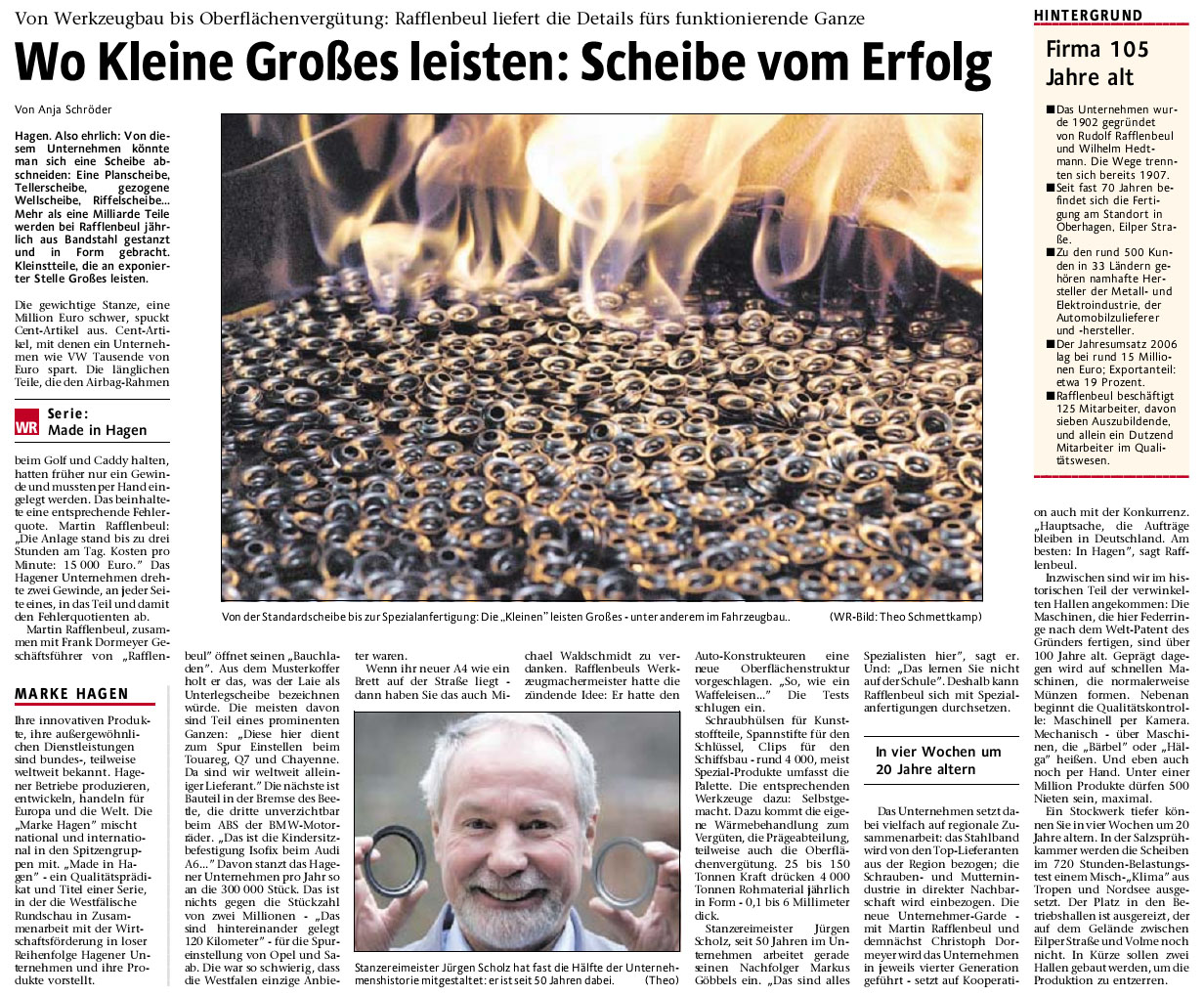
What does a car consist of? Of course, it consists of a ‘metal shell’, a steering wheel, seats, axles – and, above all, a huge number of small parts, a significant proportion of which in Germany come from the Hagen area, for example from Oberhagener Stahlwarenfabrik Rudolf Rafflenbeul GmbH & Co., which celebrated its centenary in 2002.
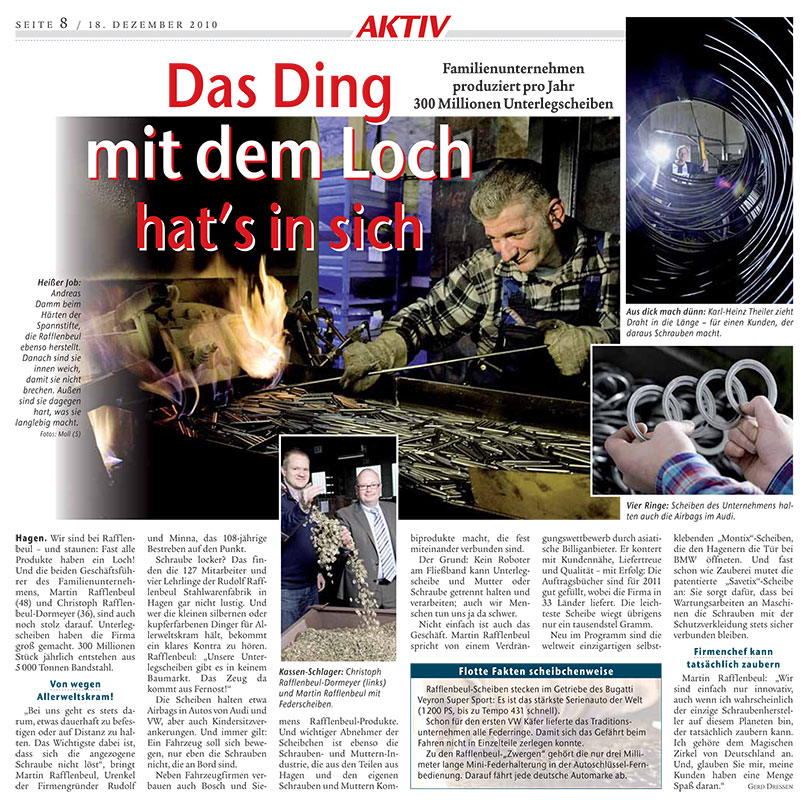
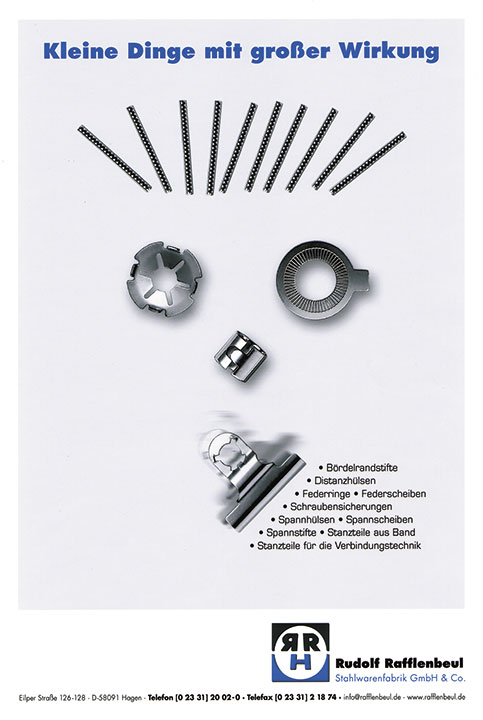
This medium-sized company primarily produces spring steel products and is not only a supplier to the automotive and automotive supply industries, but also to the electrical industry, mechanical and plant engineering, and trade. It manufactures a wide range of standard parts. In this segment, the product range comprises over 4,000 items such as spring washers, spring rings, clamping sleeves and clamping pins. In addition, special stamped, embossed and bent parts are increasingly being manufactured to drawings or samples.
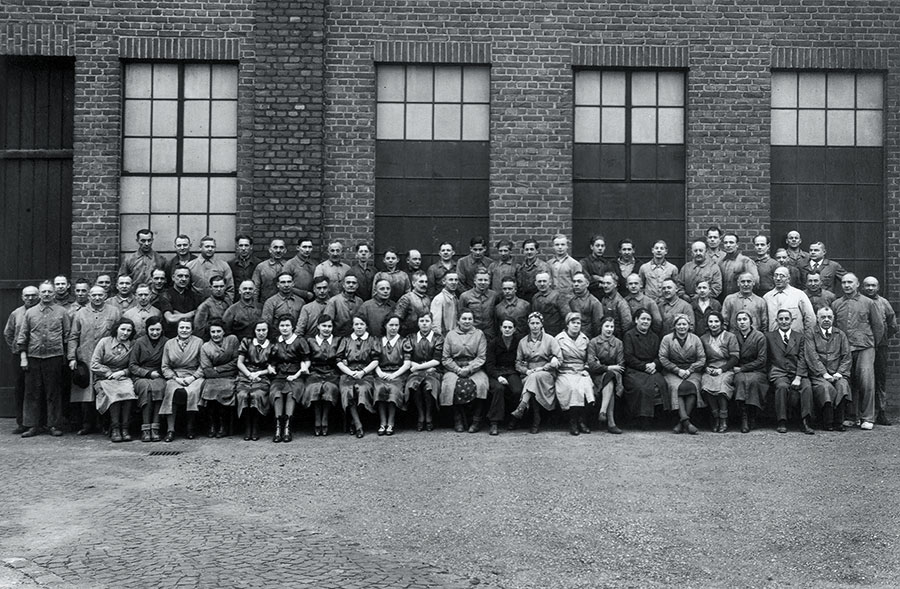
The company serves more than 900 customers, including some of the world’s leading motor vehicle manufacturers. A good quarter of all manufactured items are exported. Stahlwarenfabrik Rafflenbeul currently employs over 120 people in its production facilities at Eilper Straße 126-128. The workforce is, so to speak, ‘multi-cultural’, with employees coming from around a dozen different countries. Stahlwarenfabrik Rafflenbeul is also proud that some of its employees’ fathers or even grandfathers worked at the steel factory. This is a testament to continuity and to the fact that the relationship between employees and owners of this typical medium-sized company has been characterised by mutual trust for decades. Another part of the company’s
‘philosophy’ is to always train a relatively high number of ‘apprentices’.
100th anniversary plaques
These panels were exhibited at our 100th anniversary celebration. They are available for download here in PDF format.
Who we are
We stand for quality and long-term customer relationships – regionally, nationally and internationally. More than 500 companies in 33 countries rely on our product solutions. With a spirit of innovation and short decision-making processes, we work every day to ensure that this remains the case.
read moreCode of Conduct & Compliance
We are committed to social responsibility worldwide. In particular, we bear responsibility within the scope of our business activities towards our own company, towards customers and suppliers in the value chain, and towards the environment and society. This Code of Conduct sets out our shared values with regard to social responsibility and fair competition. The Code of Conduct is a voluntary code that we also recommend to other companies. By signing it, we commit ourselves to complying with these principles.
read more1902
Art Nouveau – a time of change – the Gründerzeit!

1907
Business premises

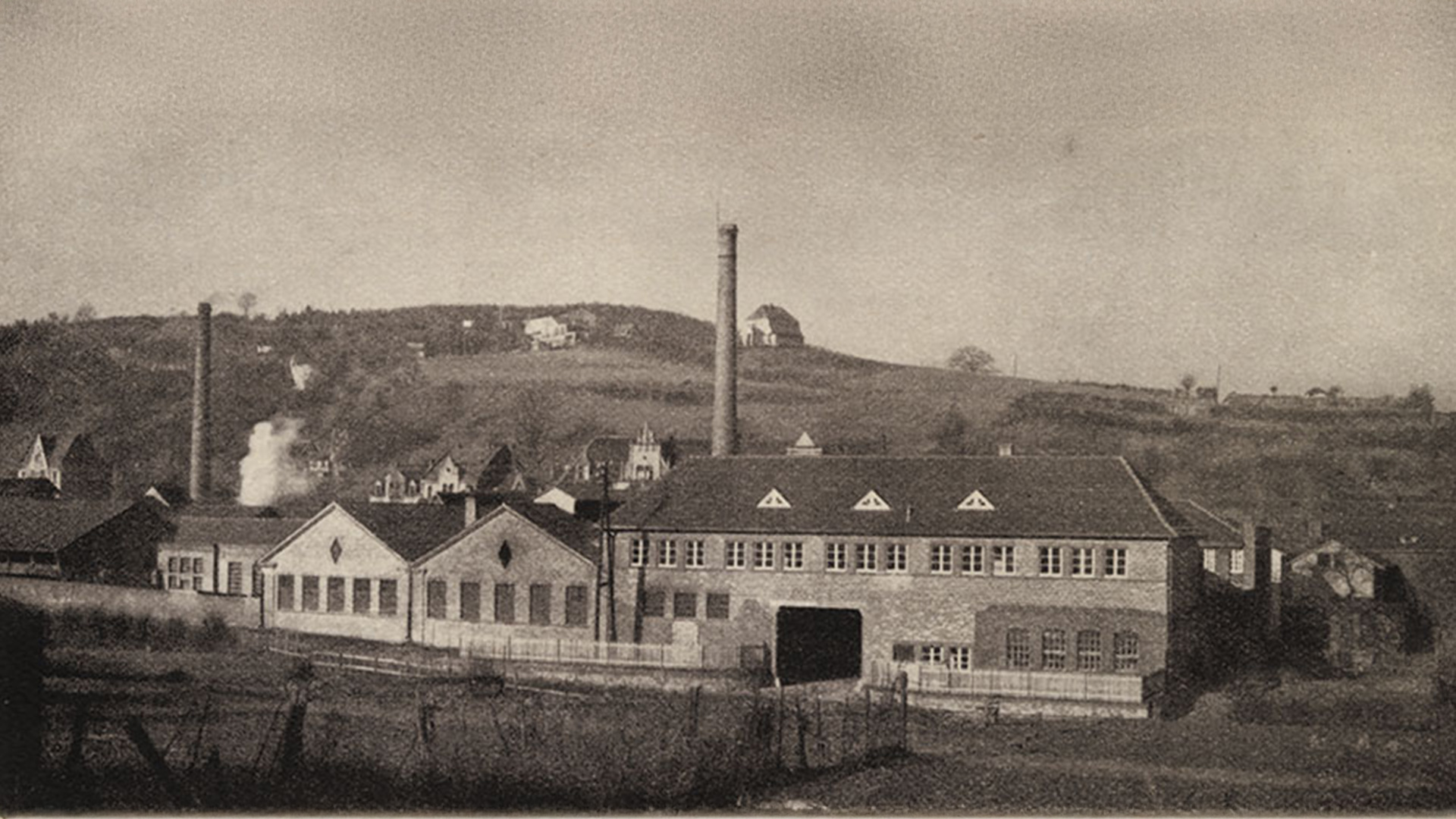
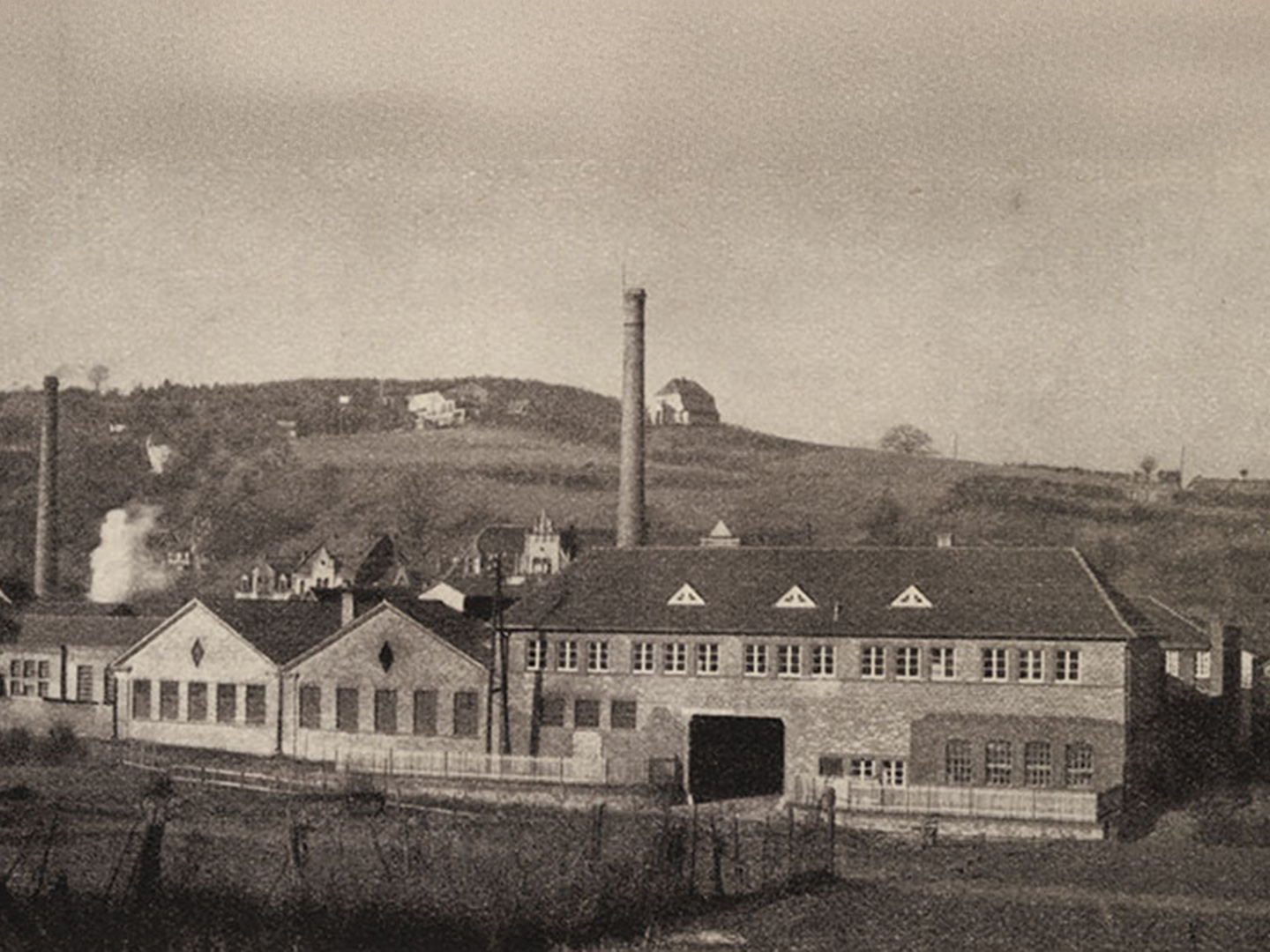
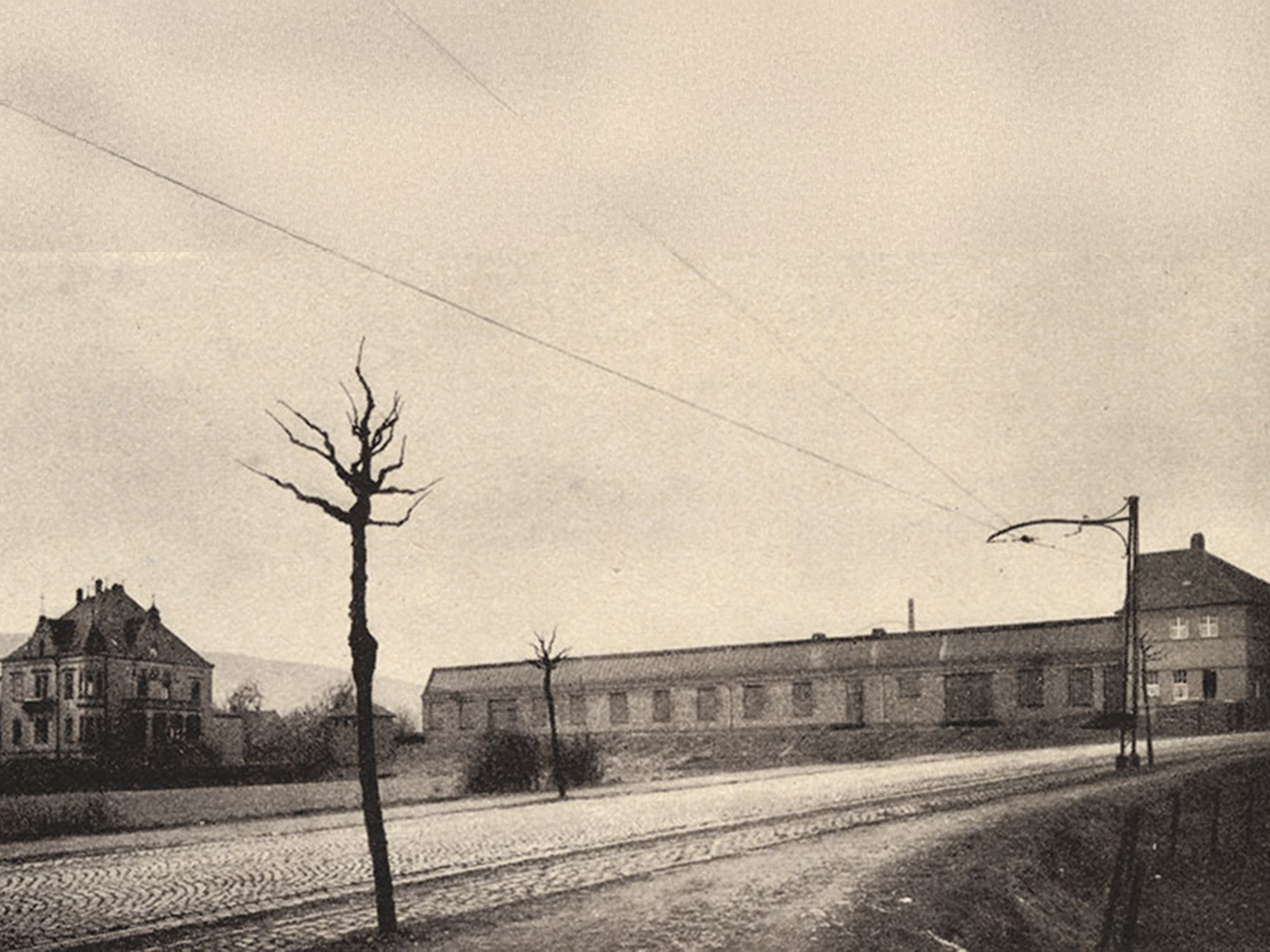
Rafflenbeul and Hedtmann went their separate ways as early as 1907. While Wilhelm Hedtmann found a new location in Kabel, Rudolf Rafflenbeul remained loyal to Eilpe and the “washers”. However, he now moved his thriving company to Selbecker Straße 65, where his mother had transferred a plot of land to him. Here, between Selbecker Straße and Wörthstraße, the production facilities were gradually expanded.
1922
Generations

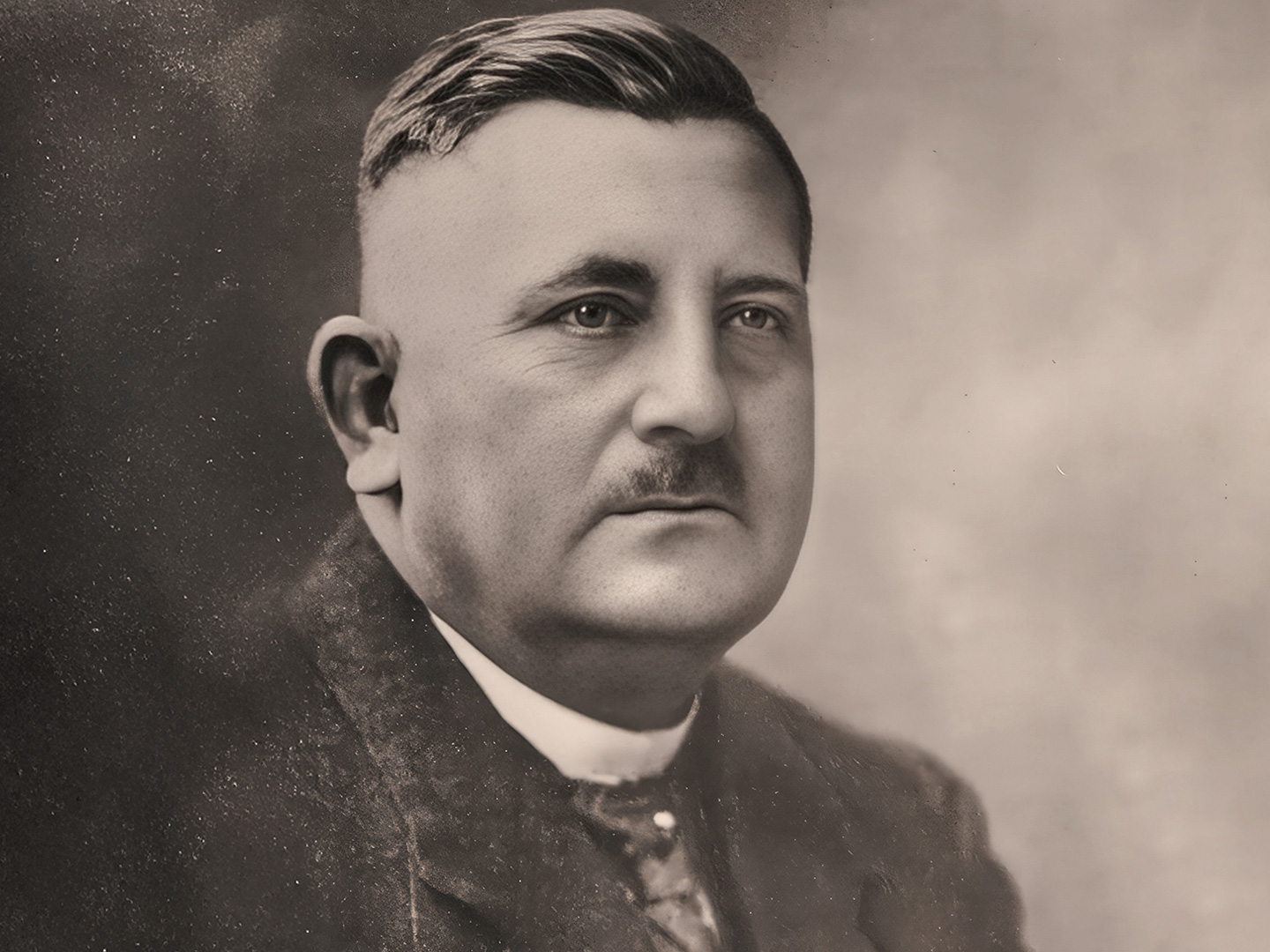
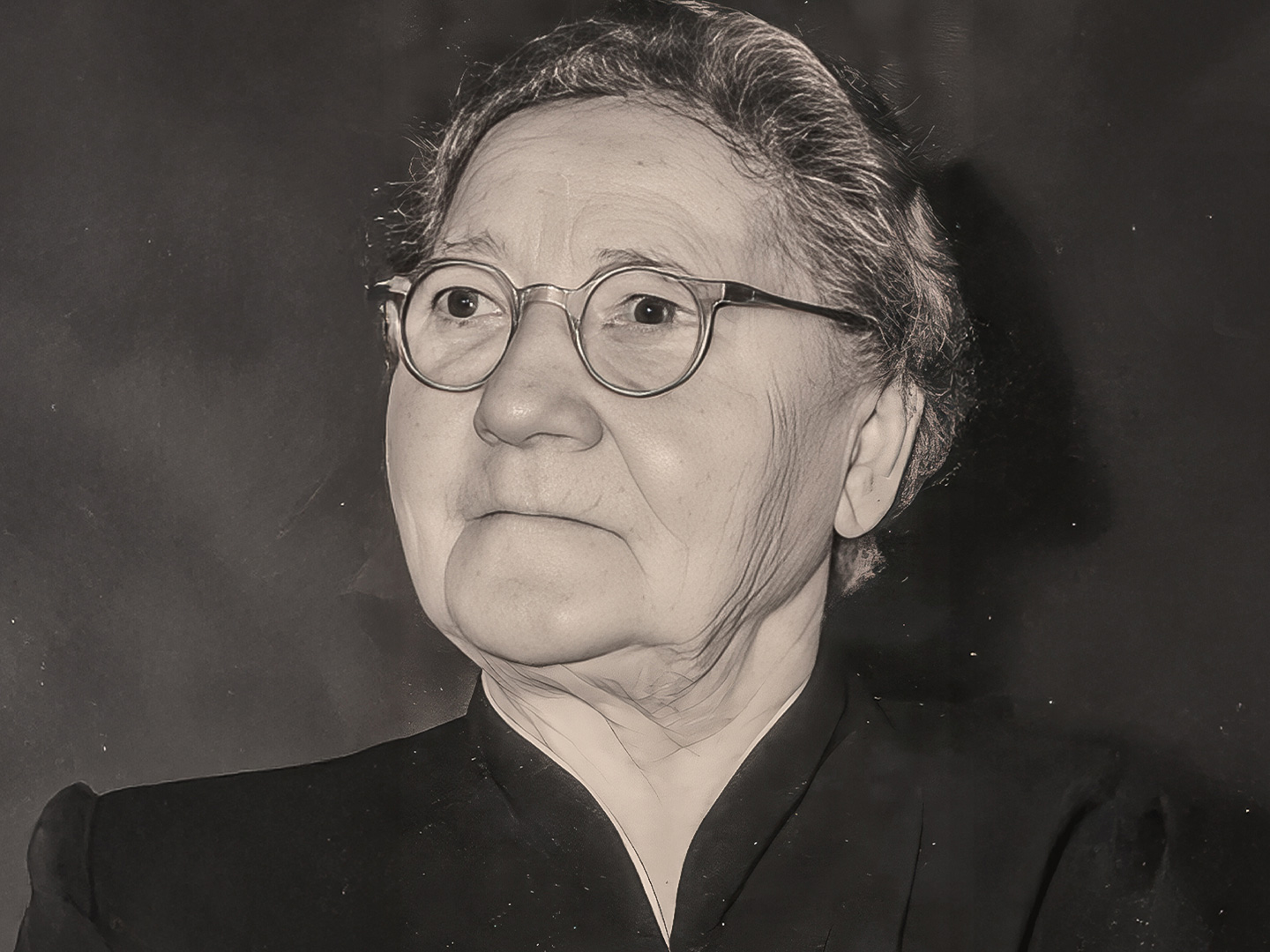
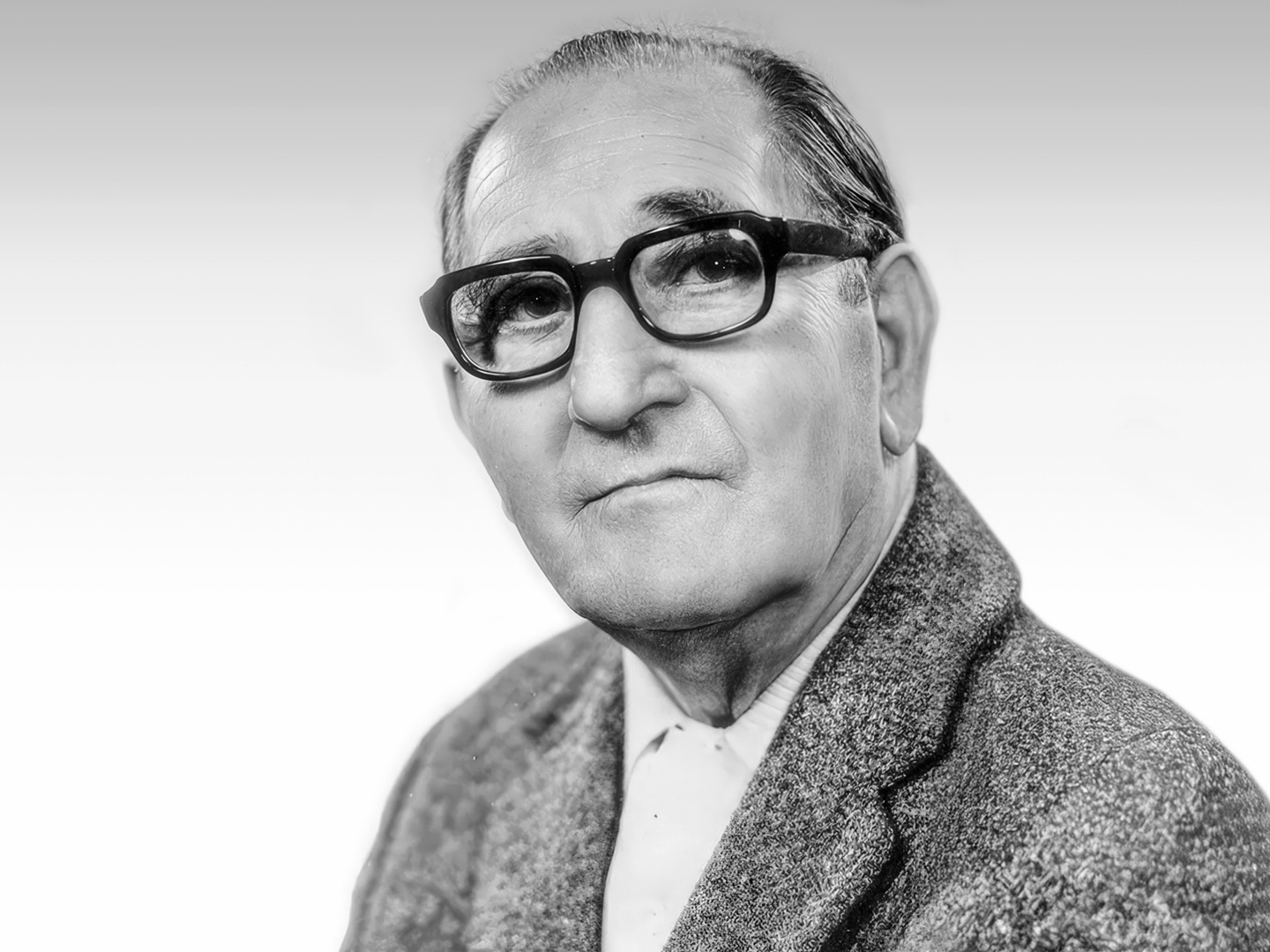
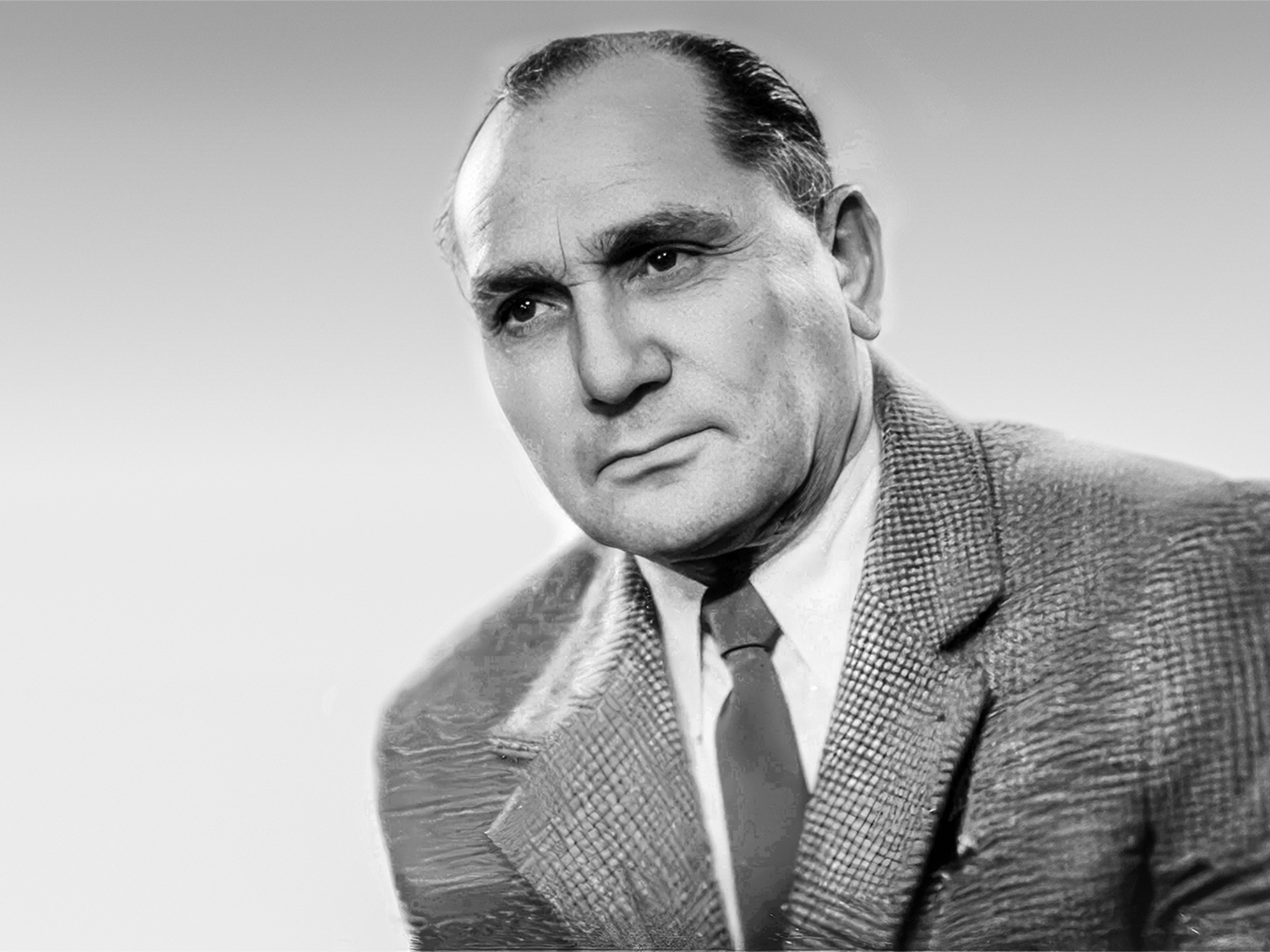
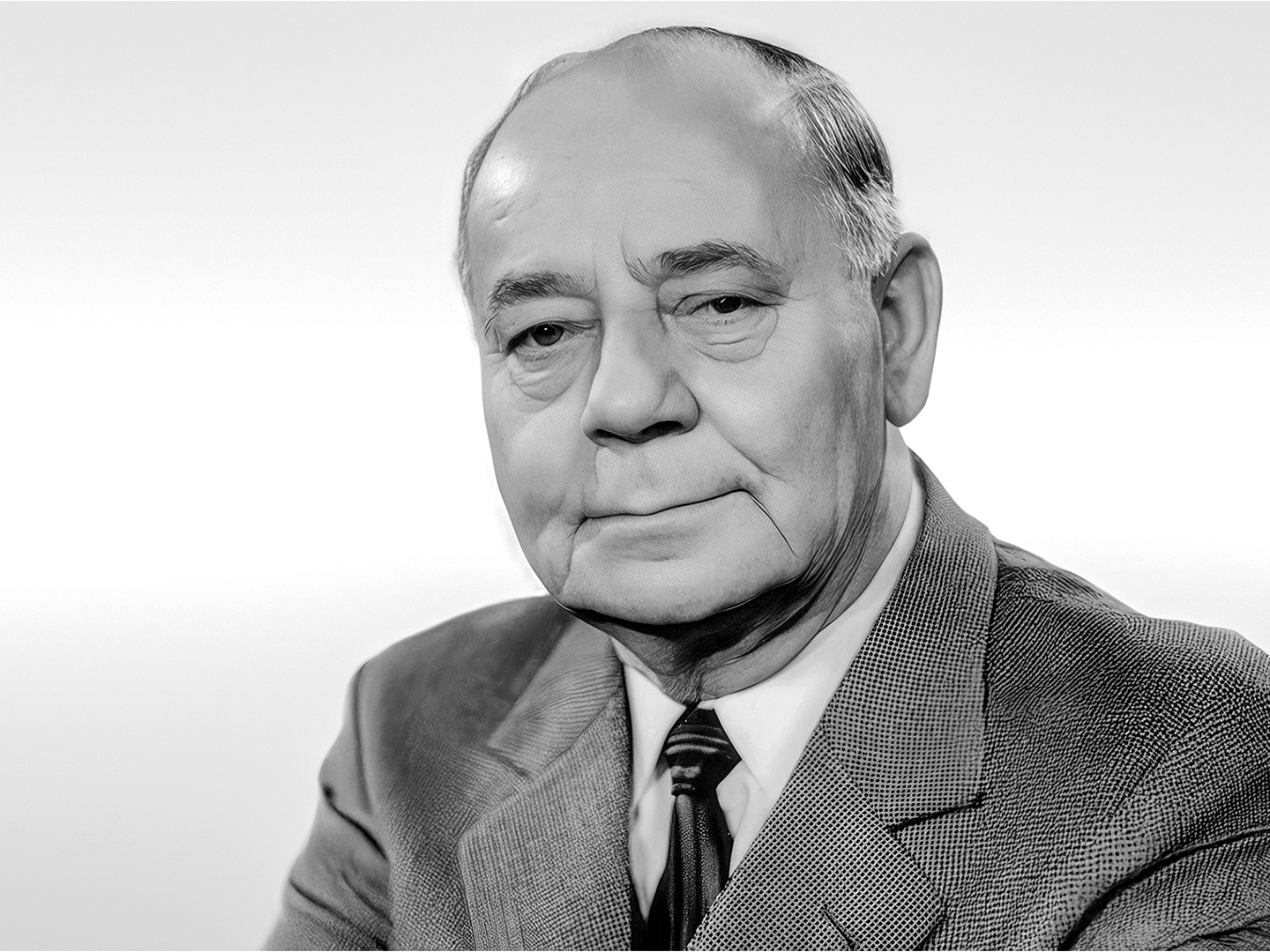
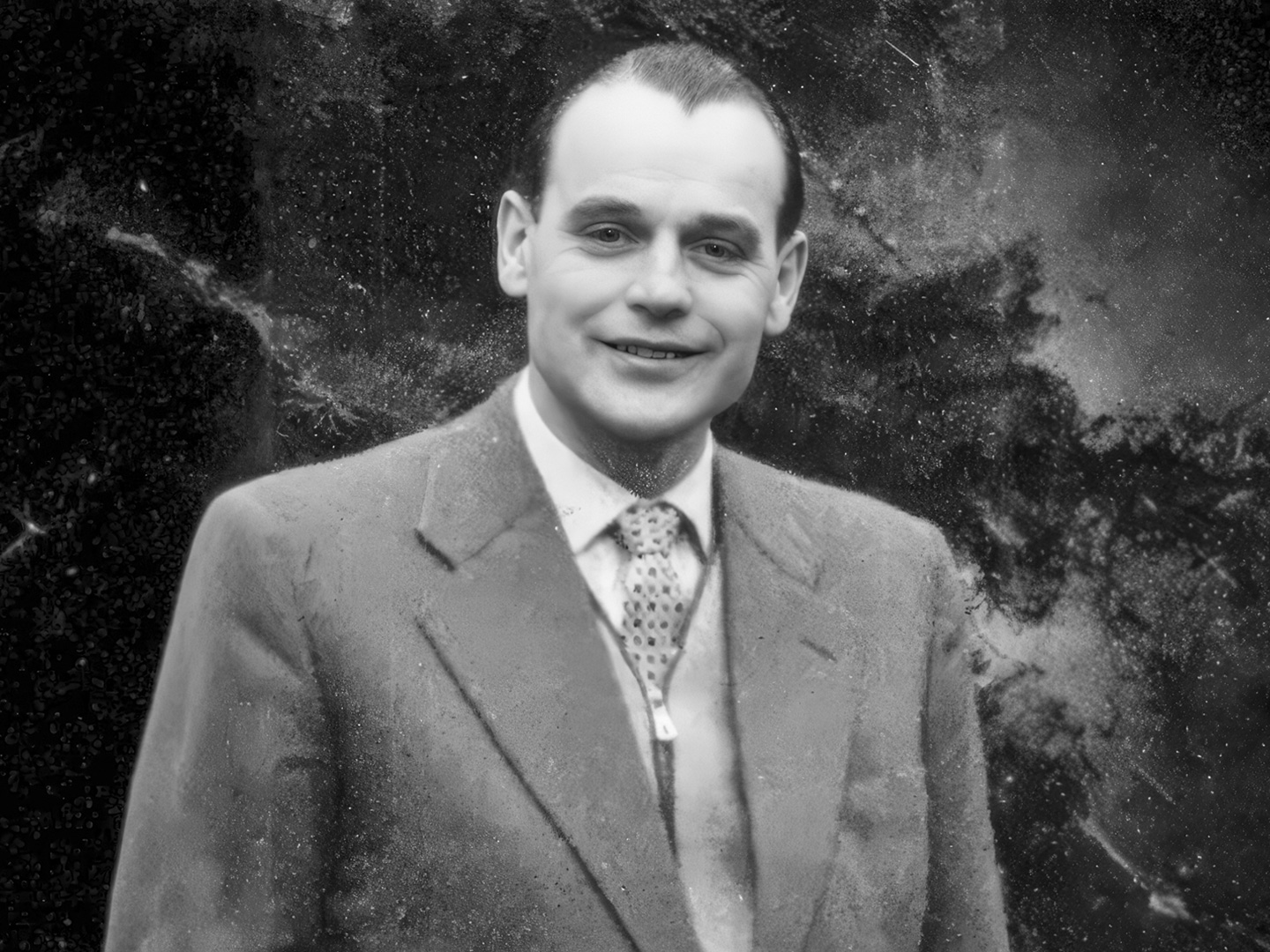
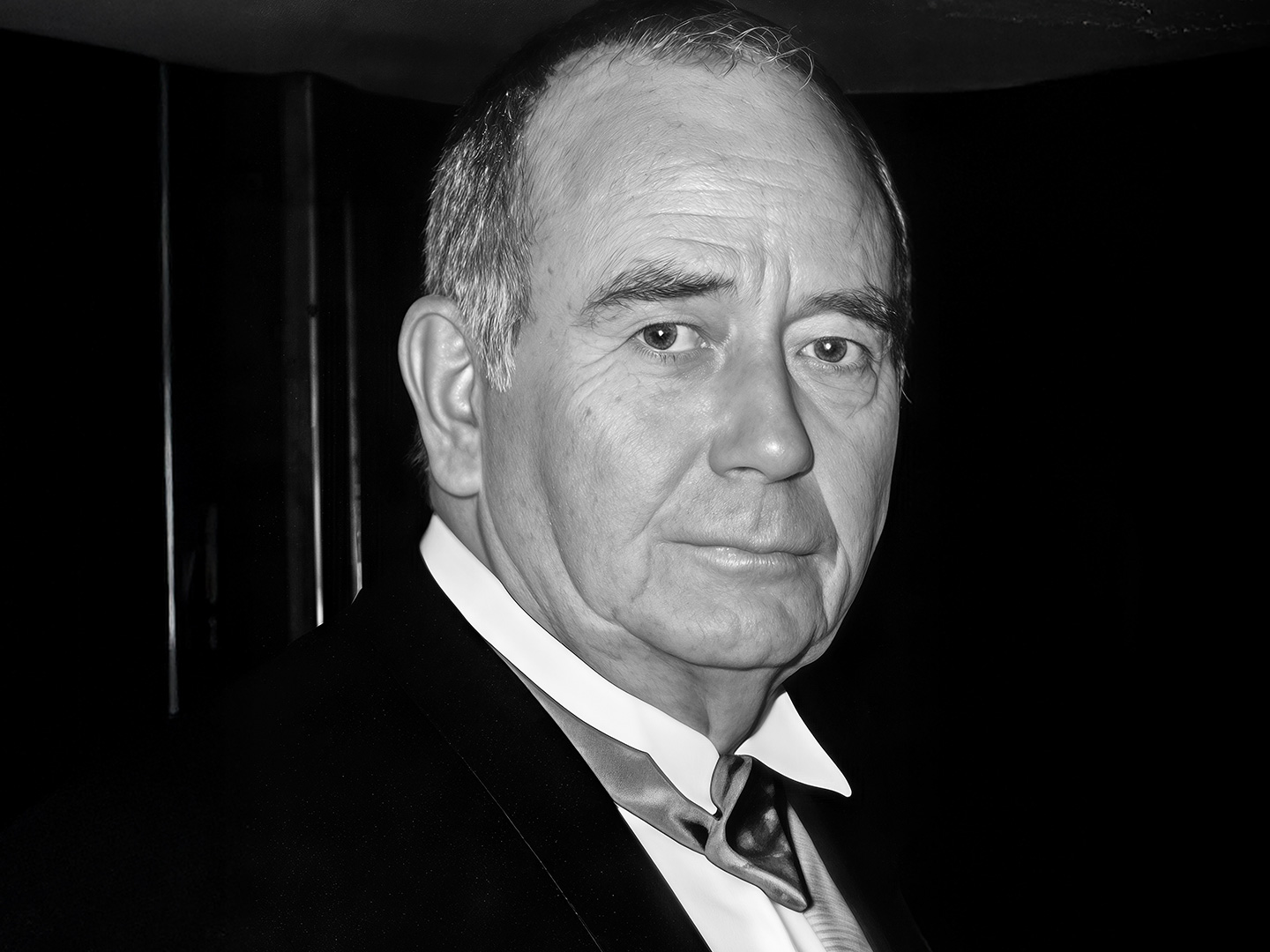
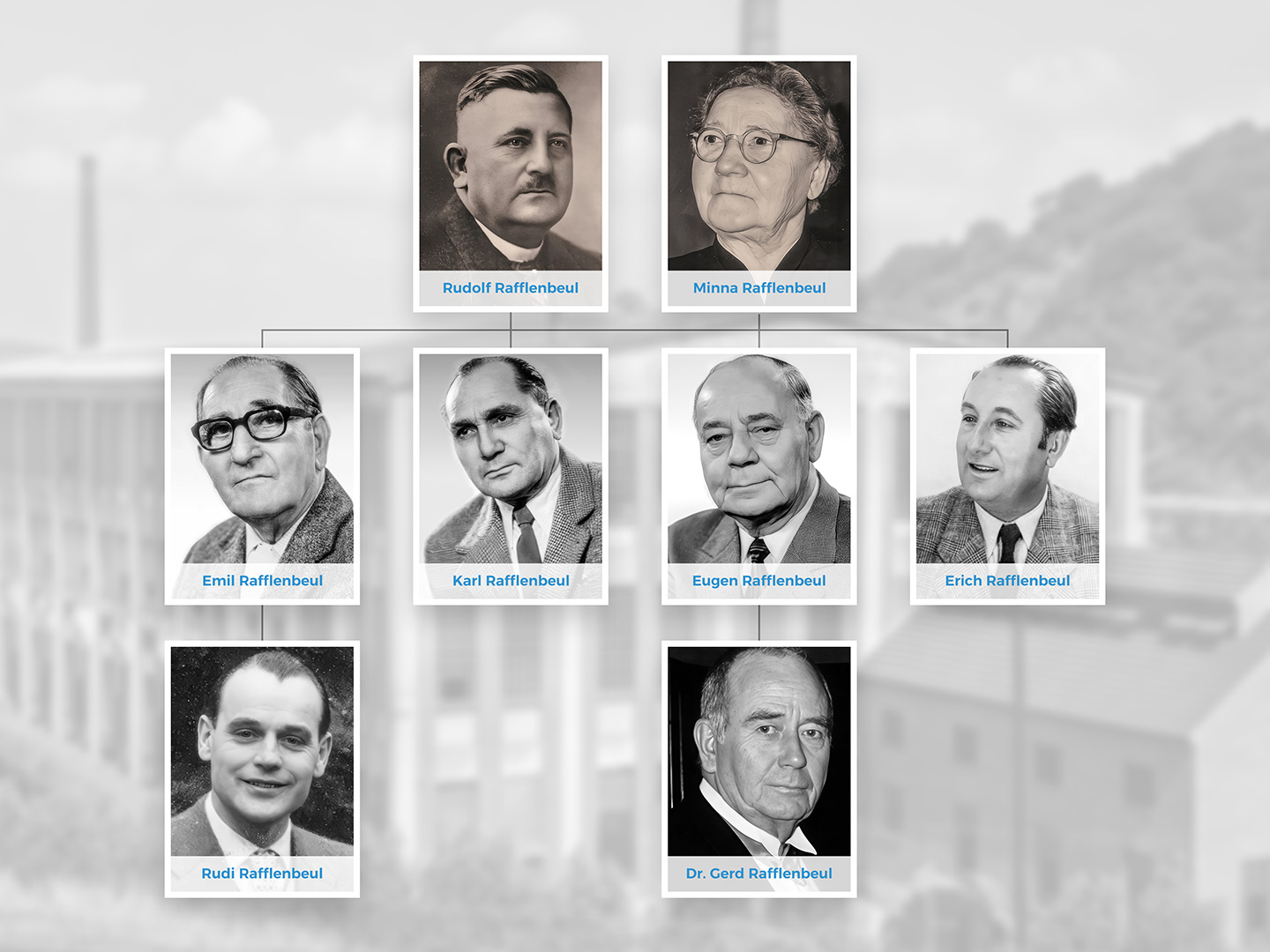
Since Rudolf Rafflenbeul laid the foundation for the now more than 100-year-old family business in 1902, the company has been run by his descendants, now in its fourth generation. The first partnership agreement from 1922 names Rudolf Rafflenbeul and his wife Minna, née Lepperho, as well as their four sons Emil, Karl, Eugen, and Erich as co-partners.

1926
Patents
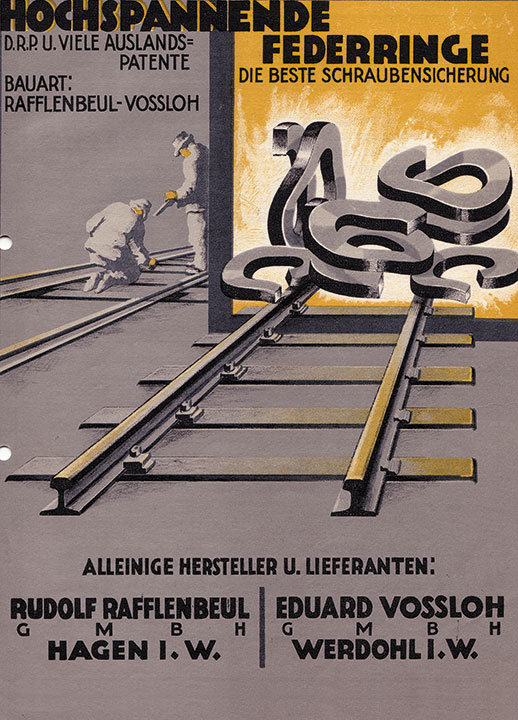
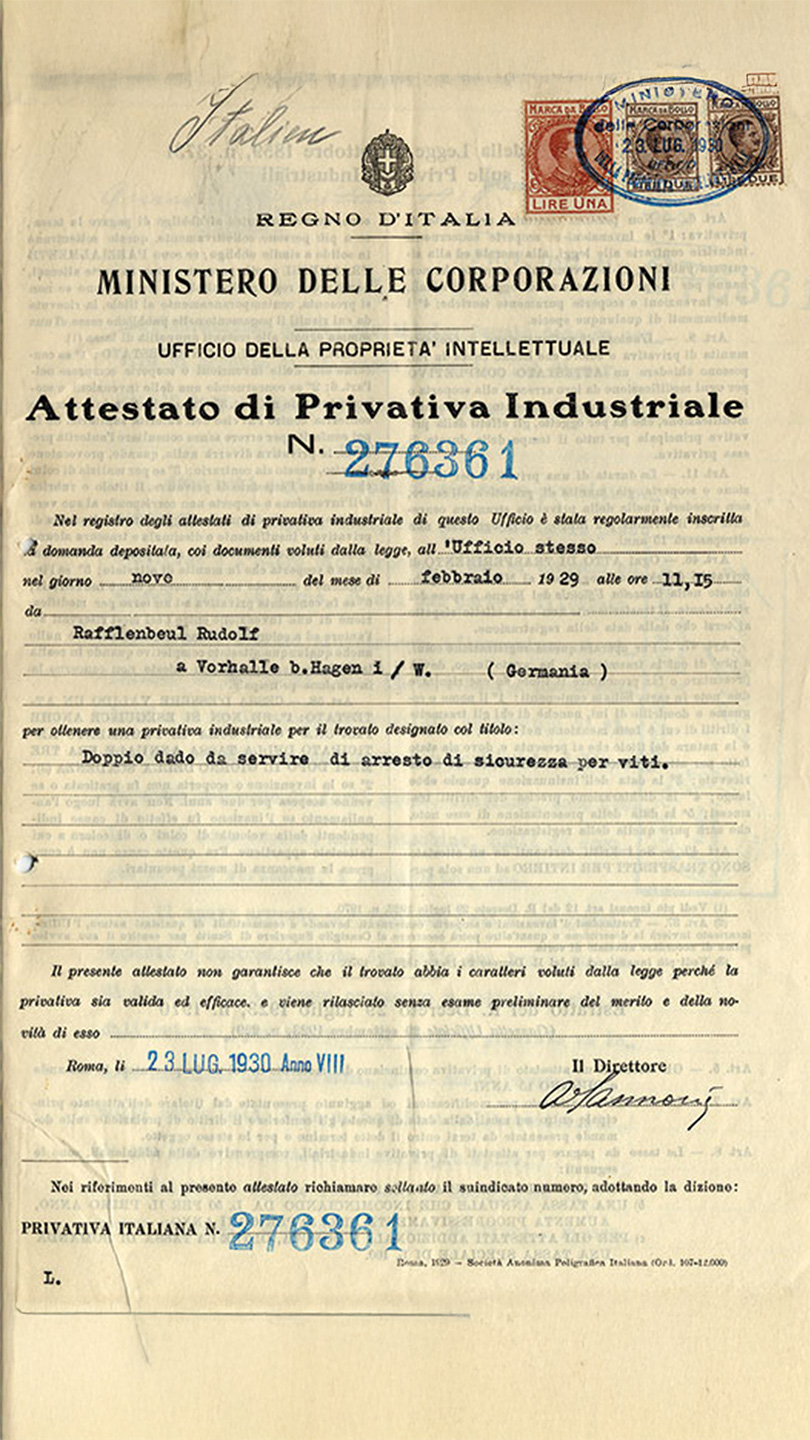
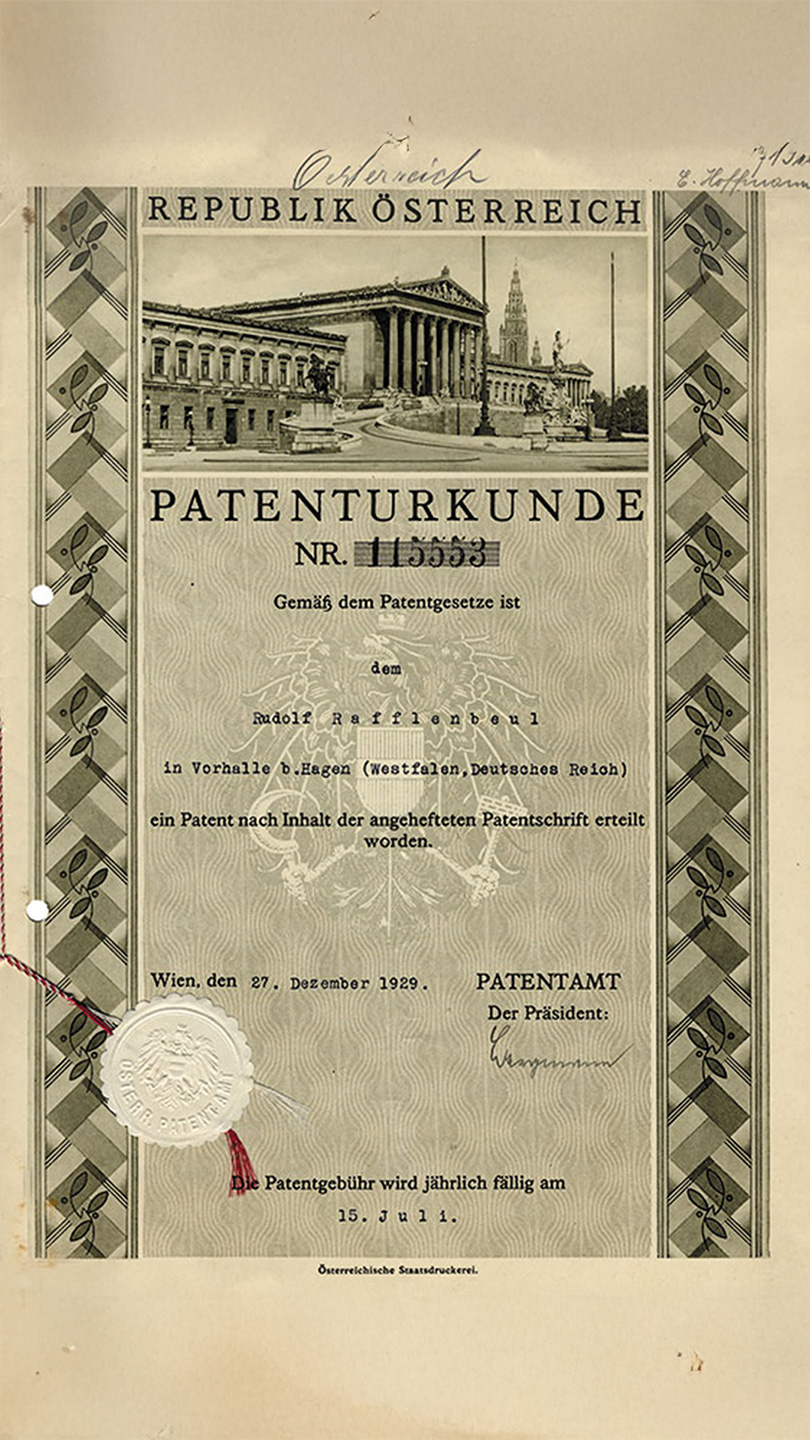
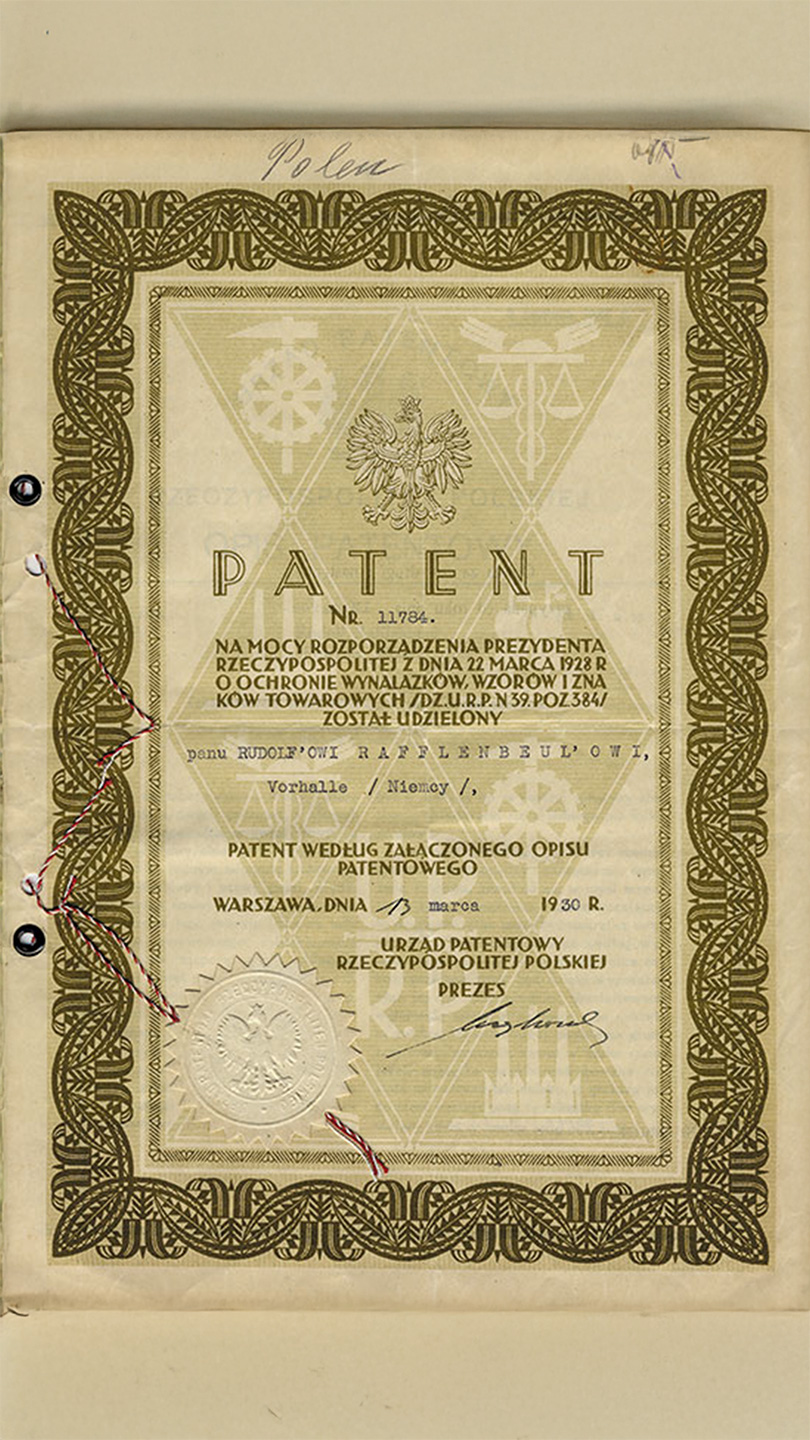
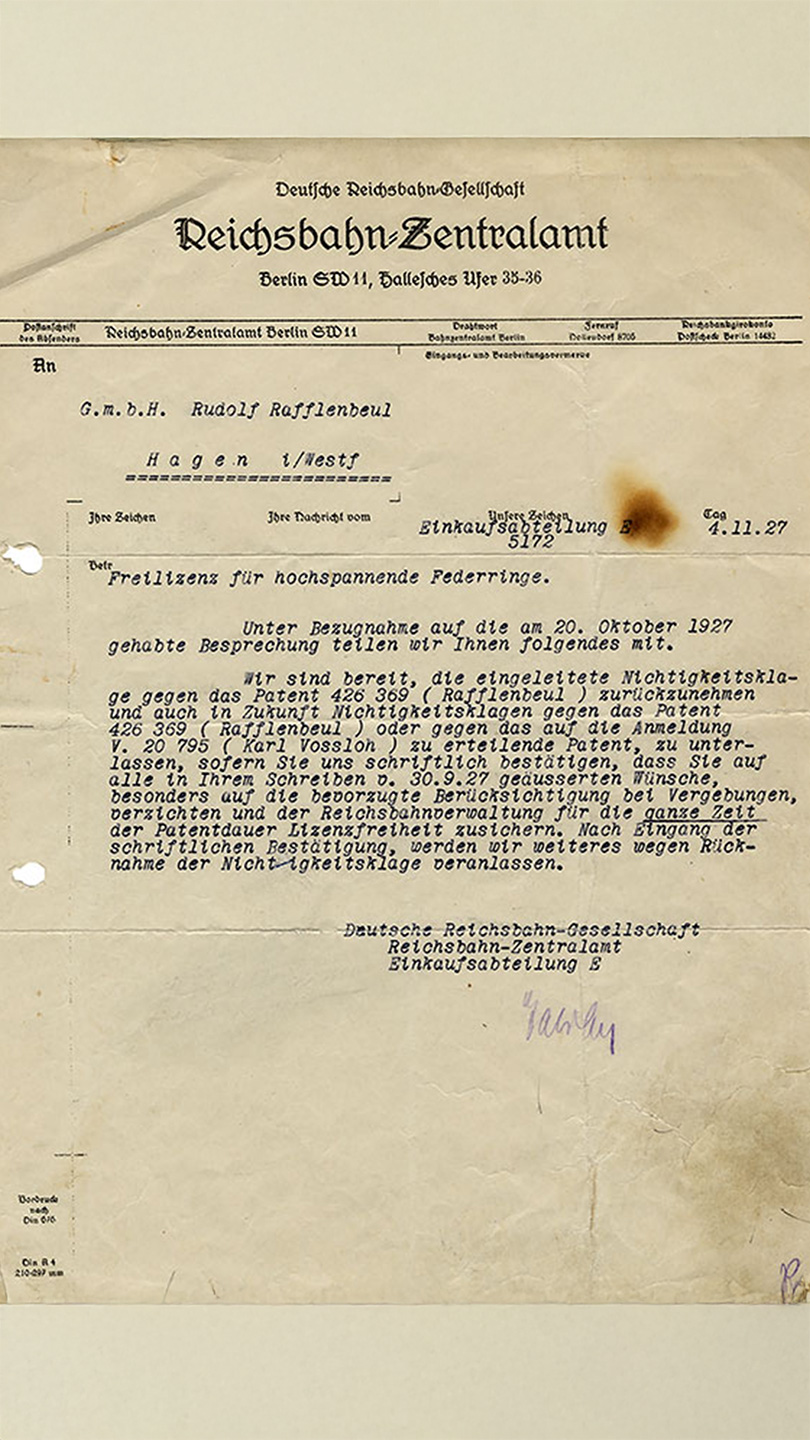
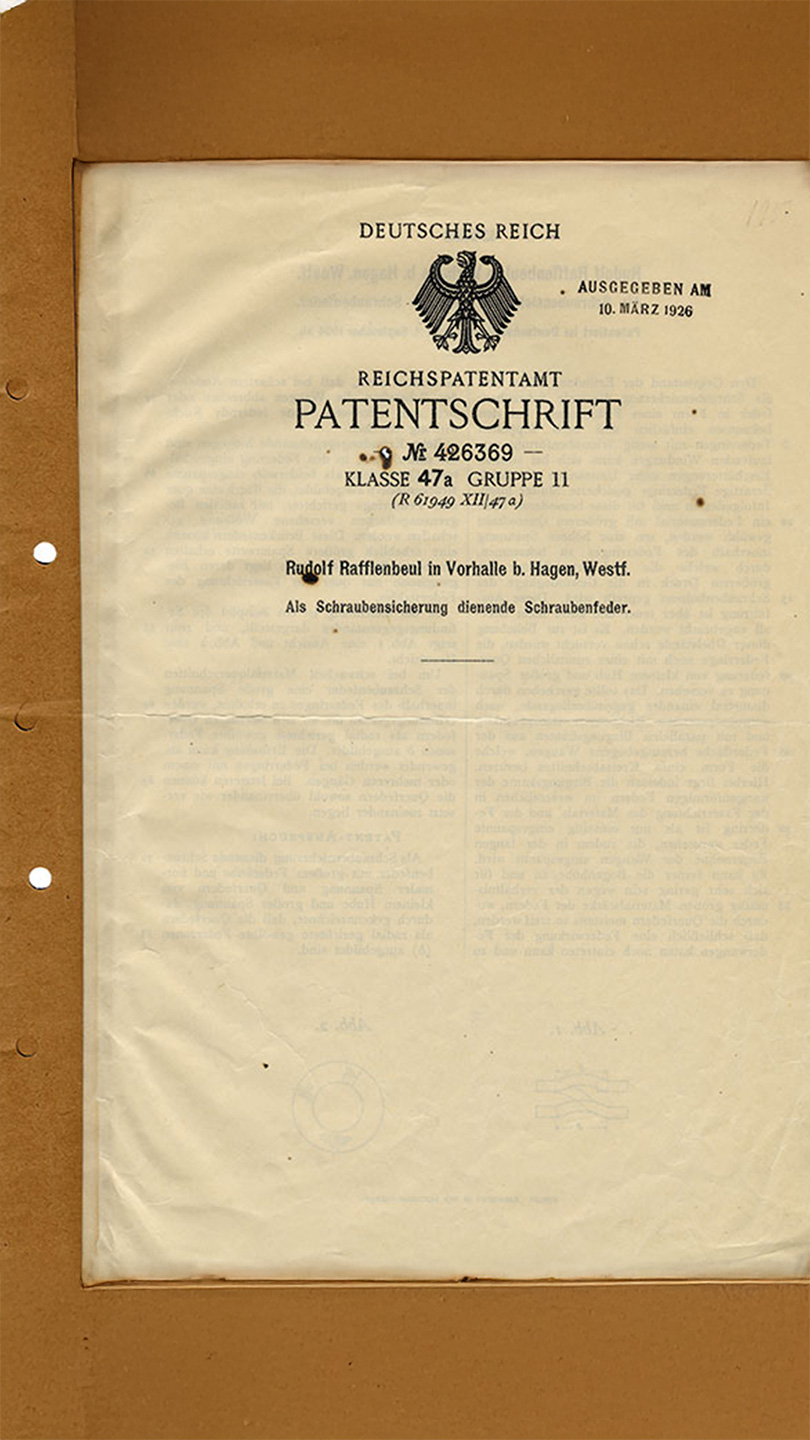
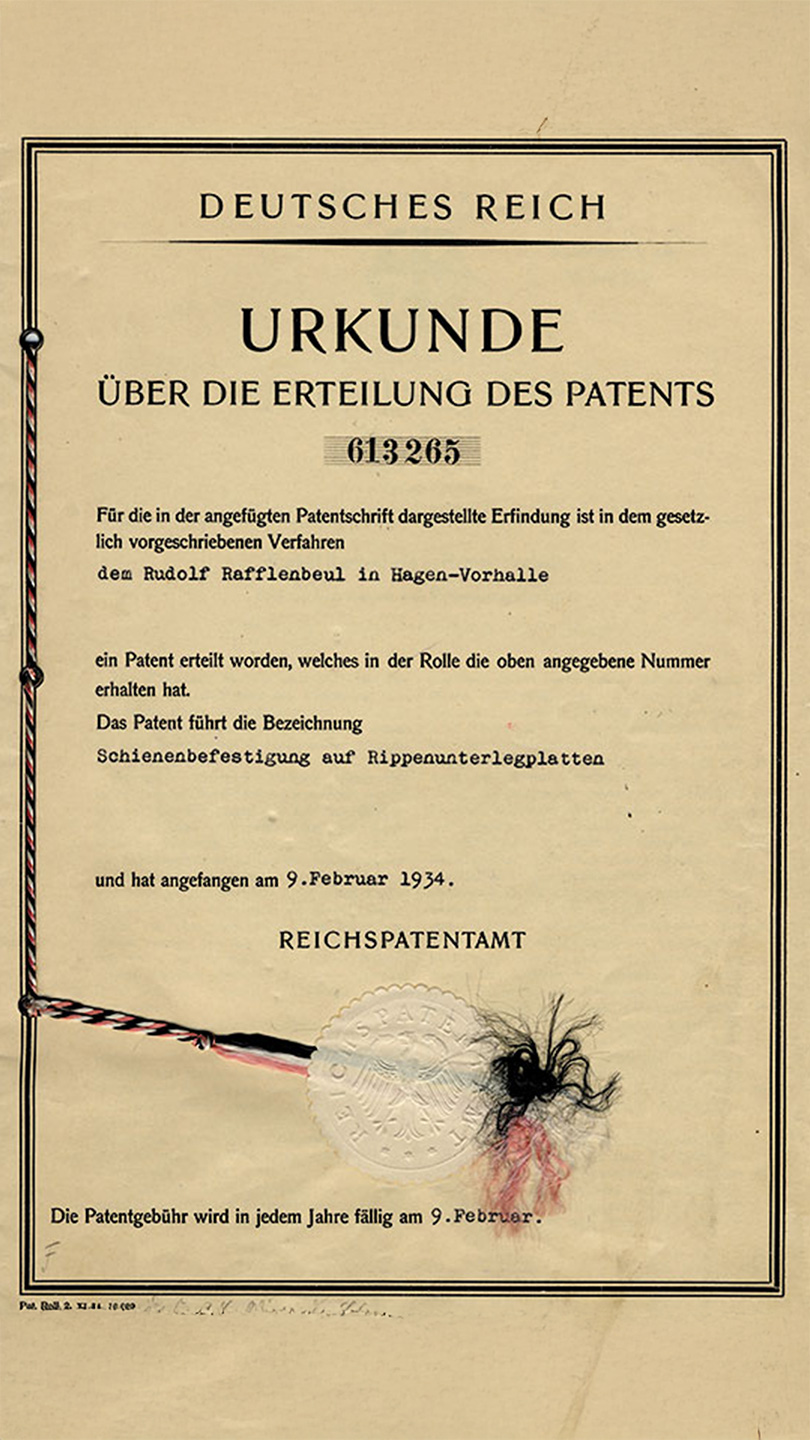
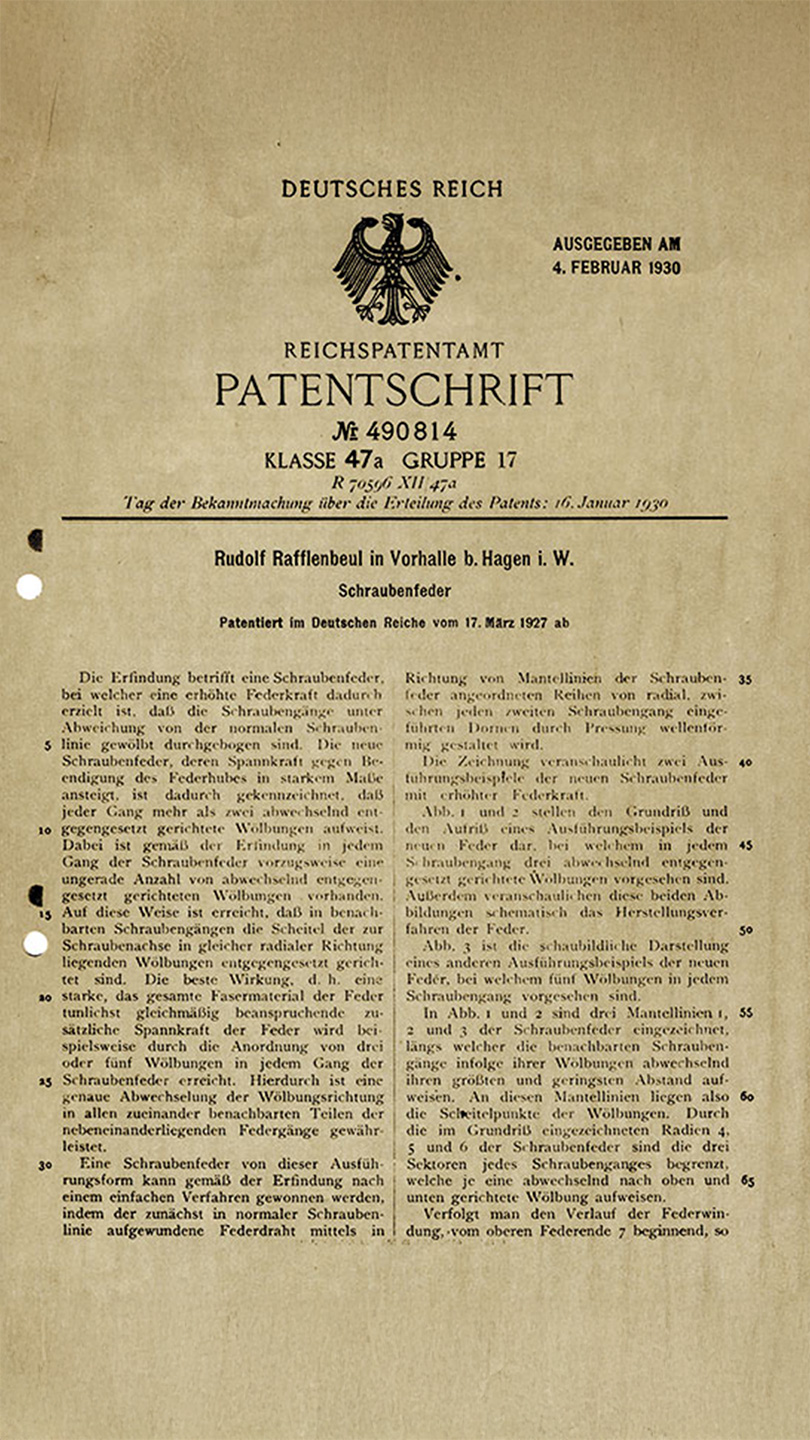
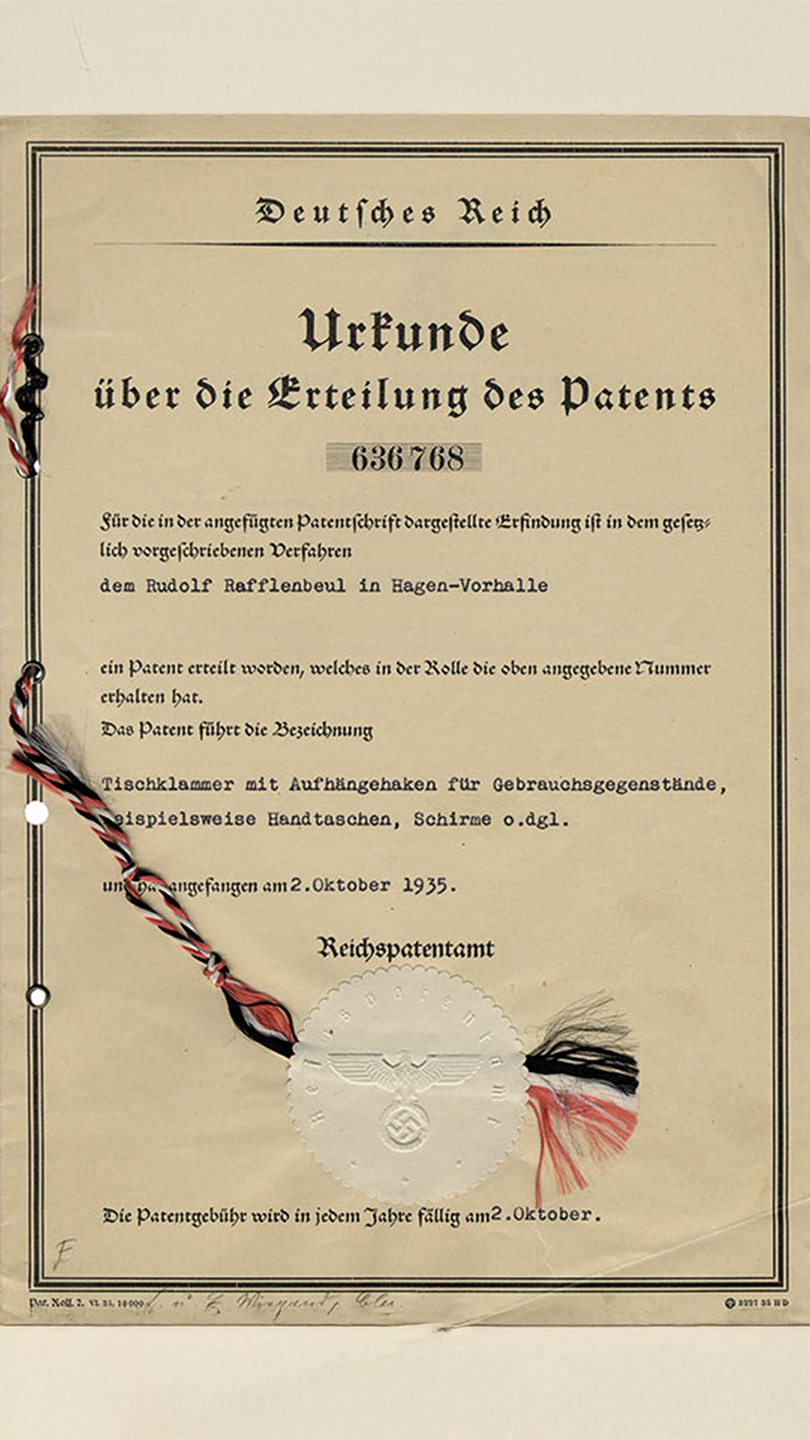
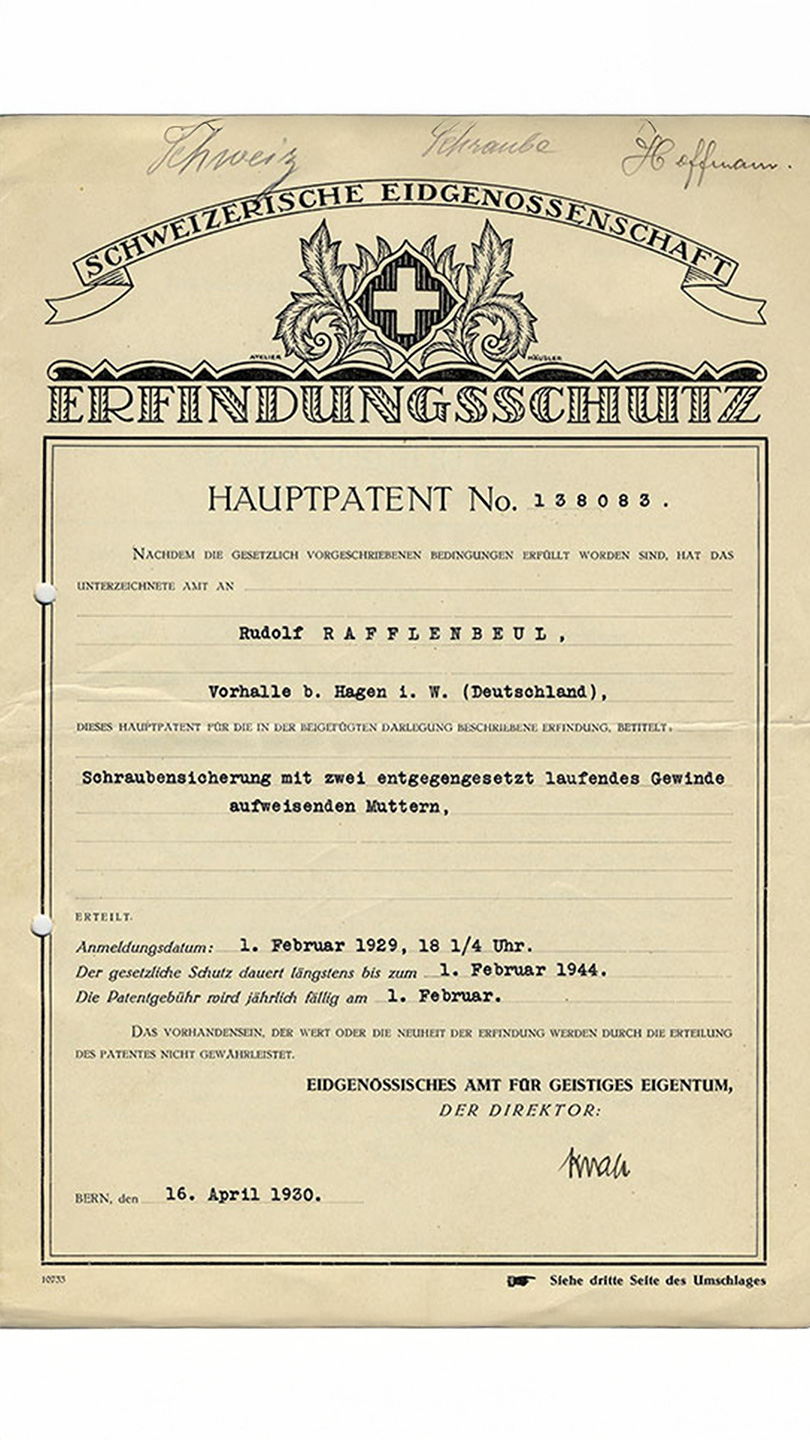
The invention of the patented ‘coil spring’ in 1926 developed into a bestseller after decades of repeated changes and expansions to the product range. The coil spring forms the basis for the company’s now almost legendary ‘high-tension spring ring Fe 6’, which is used in the superstructure of the German Reichsbahn and Bundesbahn to secure the connection between the rail and the sleeper. Ultimately, ever-increasing train speeds required different fastening systems, which led to the discontinuation of ‘Fe 6’ production in the mid-1990s.
1936
Business premises
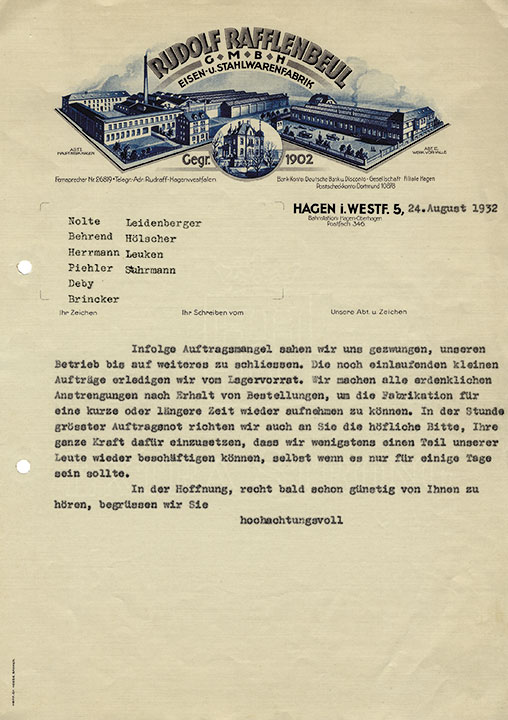
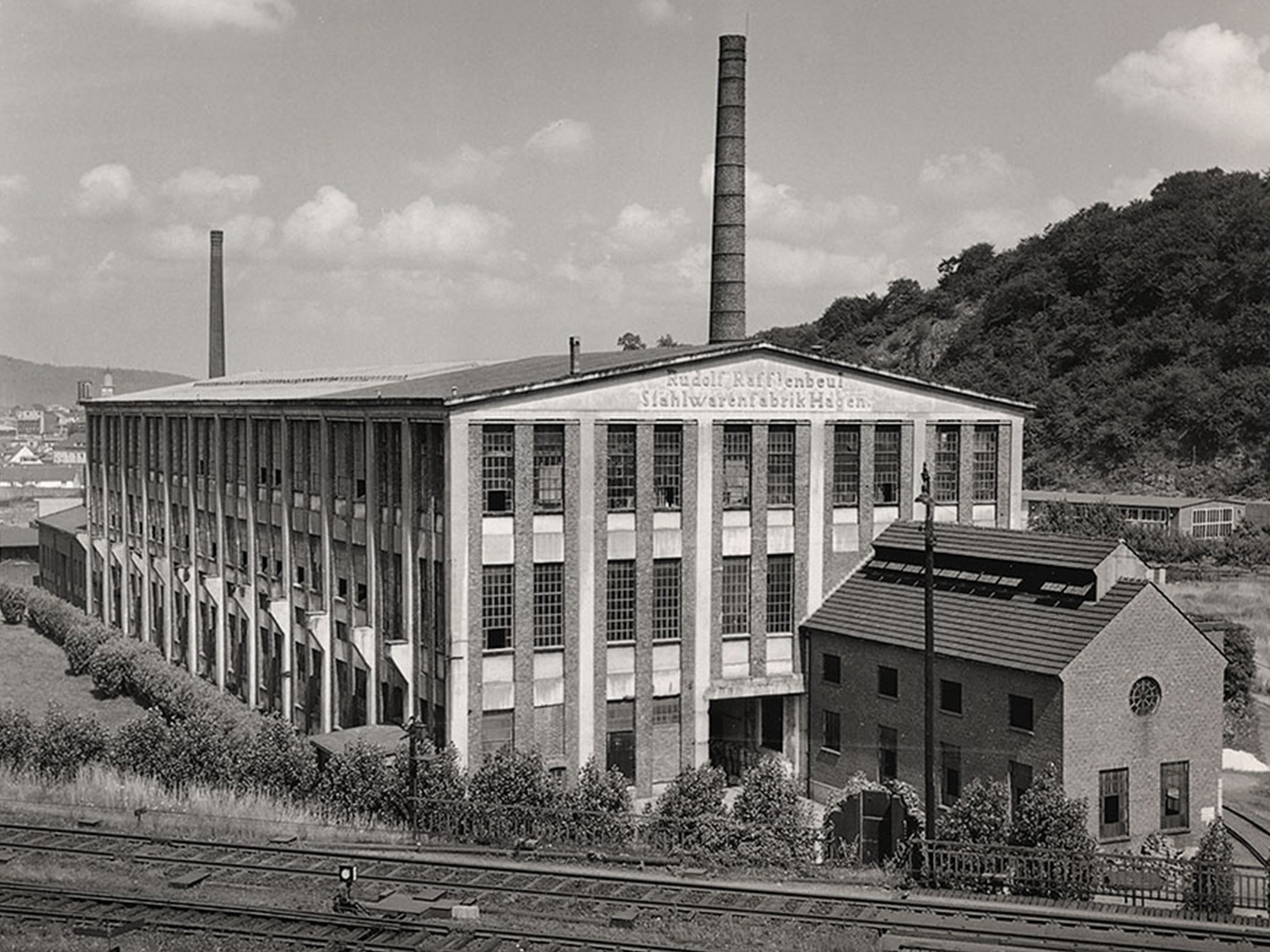
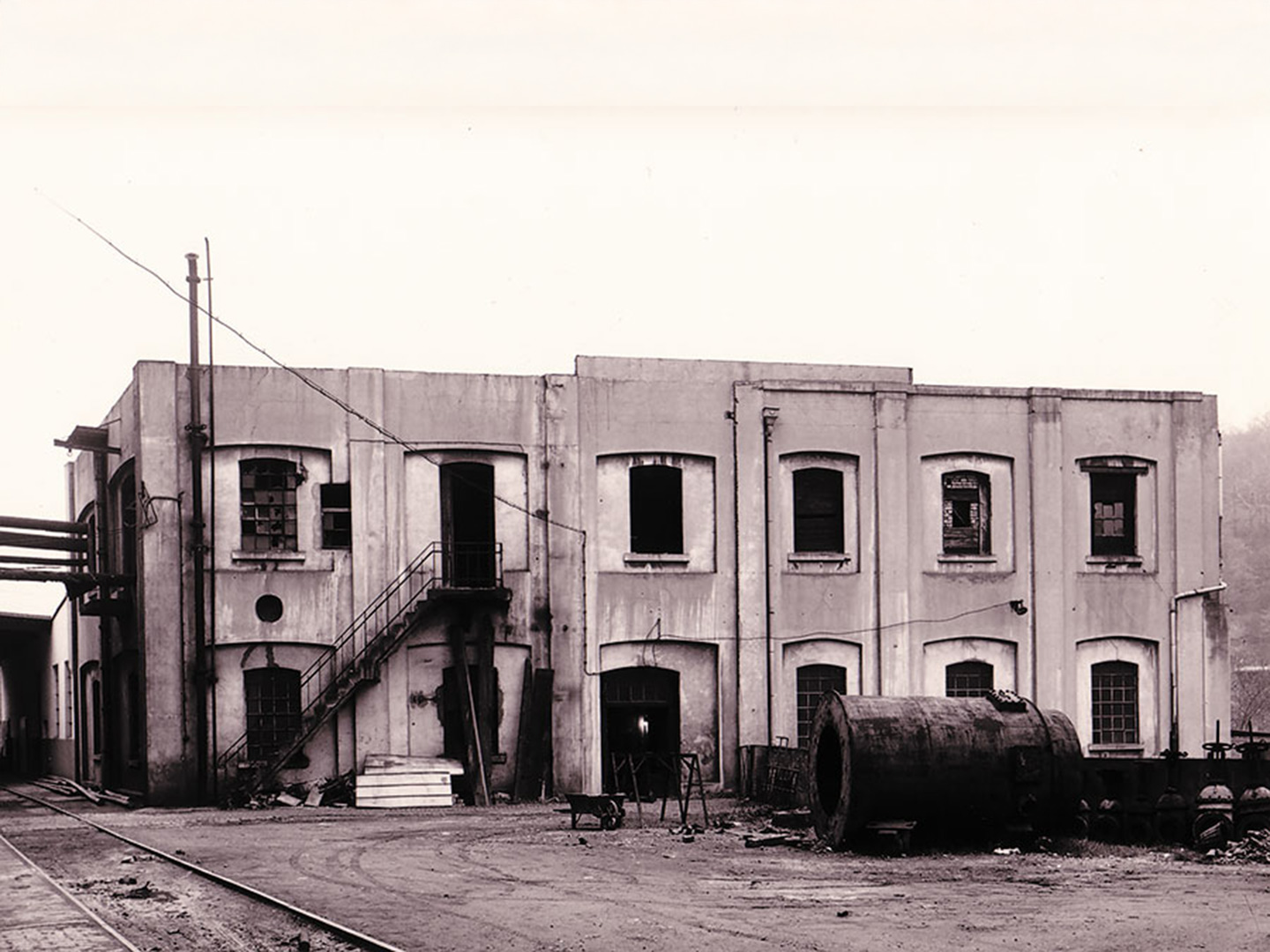
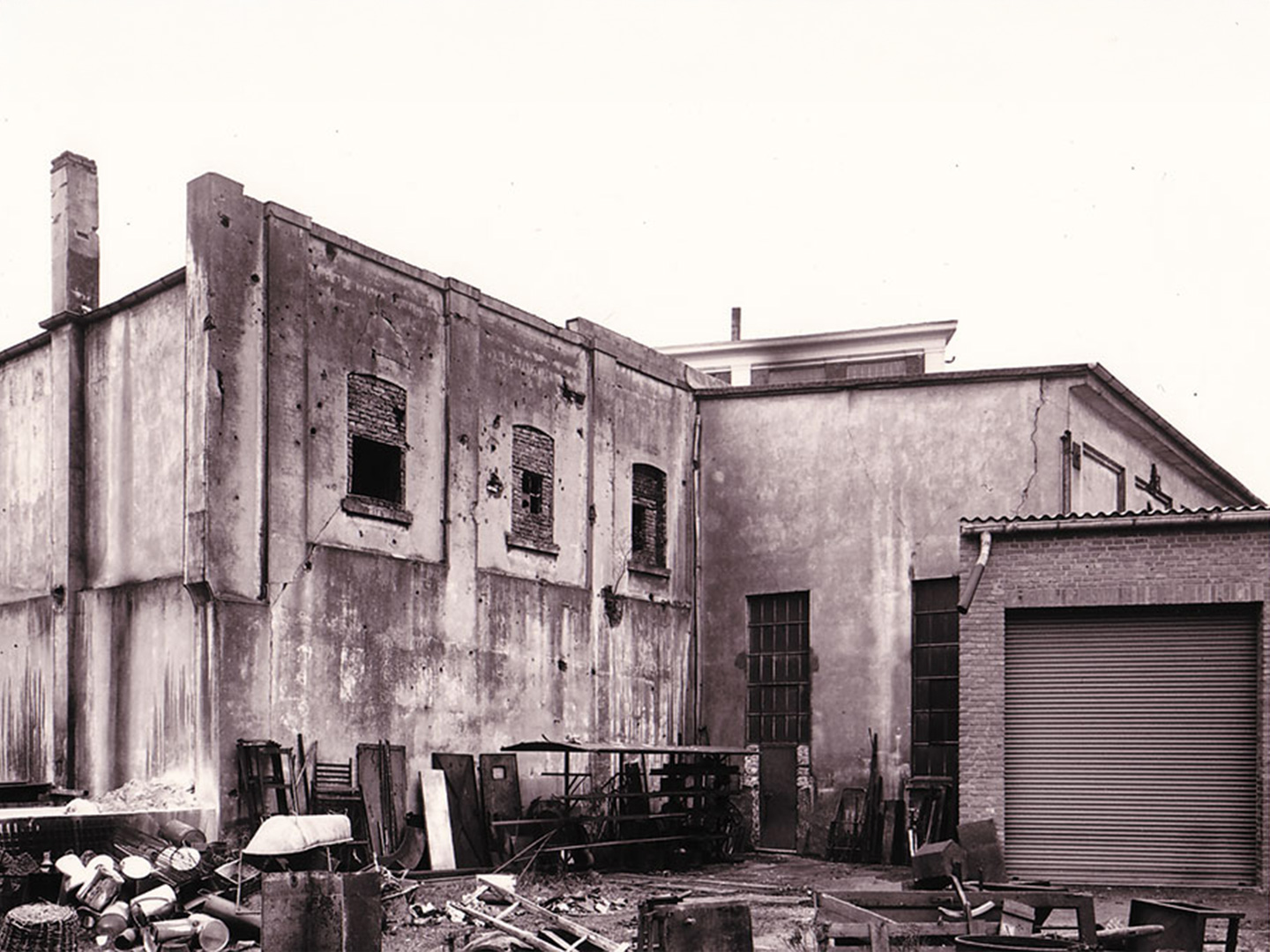
After around 30 years, Rudolf Rafflenbeul sold the building and land to the Horst Dannert spring factory in 1936. Production was relocated to Oberhagen, where a year earlier a 30,000 square metre site with factory buildings, a railway siding and hydroelectric power plants had been acquired from the Hagen cast steel works on Eilper Straße, which had been shut down in the 1920s. The company headquarters are still located at this site today. About two decades earlier, during the Second World War, Rafflenbeul had purchased a plot of land in Vorhalle on Schlieckmannstraße in 1917 and had a factory hall and a residential building constructed. From 1925 onwards, the company produced split pins, scythe rings, stamped parts and chain links for agricultural machinery there. This production was also relocated to the new site in Oberhagen in 1936. This brought the plants in Eilpe and Vorhalle together under one roof, resulting in considerable synergy effects.
Today
Over 100 years of Rafflenbeul
Over the course of the company’s 100-year history, production facilities and manufacturing processes, organisation and quality management, and, last but not least, employee qualifications have been continuously adapted to technical developments and current requirements. New products have been added and additional customer groups sought. A high-performance wire drawing plant, a stamping department with its own toolmaking facility, computer-controlled hardening and mechanical galvanising plants, a quality assurance system certified by major customers and DIN-ISO, and, last but not least, an organisation that reliably links production, sales and customers, define the image of a traditional and successful medium-sized family business today.